As I have done more classes and workshops on giving great presentations—or, at least, presentations that feel like good uses of everyone’s time.
Up-top notes
- Building good presentations is not simple (though it can be systematic)
- It’s normal to feel stressed about presentations
- No shame if you have made a ‘bad’ presentation in the past (I have given some that I don’t even remember giving I was so nervous!)
- But, you do need to put in time to make good presentations—this post should provide some guidance on how to spent that prep time and effort.
- Results and key points don’t just sell themselves—it takes time and effort!
Three key takeaways
- Build presentations that serve your audience—and you. No one delivers—or listens to—presentations for their health.
- Build your narrative before your slides.
- Build presentations for understanding and impact. It’s not about everything you want to say, it’s about the key things you want your audience to understand, remember, and do.
8 (almost) Ps
Build presentations that serve your audience—and you.

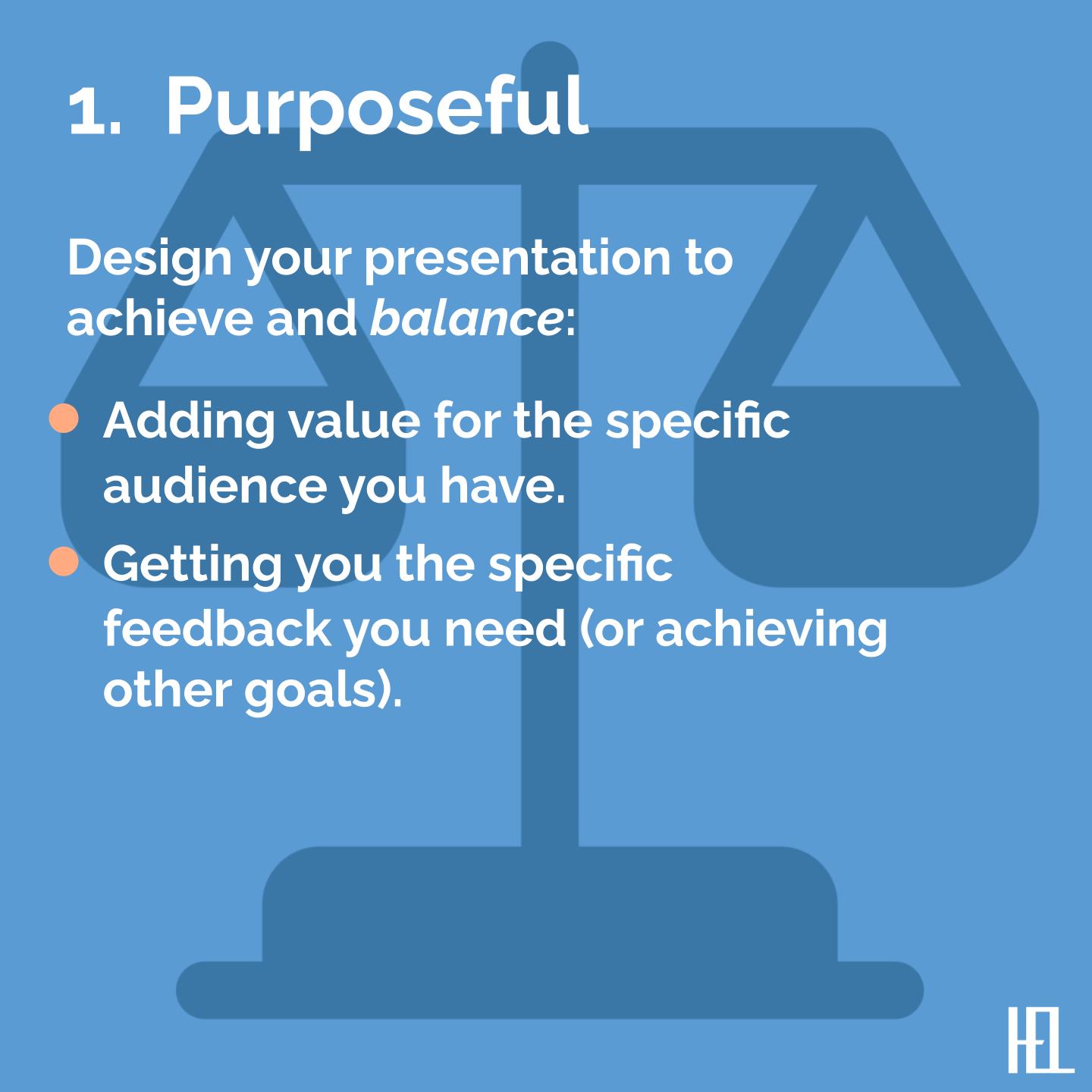
- PURPOSEFUL
- Presentations should be built to add value for the audience you have
- You aren’t just *giving* a talk, you are asking people to attend—and attend to—your talk. At a minimum, the ask you are making of people is that they don’t fall asleep during your presentation or walk out of the room. Basic table stakes. Hopefully, they will also put down their phones. Ideally, they will ultimately know, feel, or do something differently following your talk—including wanting to know more information. It’s unrealistic to believe that most people will completely change their priors or ways of doing things following a talk, but it is good to understand where they are beforehand, where you can hope to get them, and where you ultimately want them to be—and how that will actually be valuable *to them* to make that journey.
- Presentations should be built to get you the feedback you need (or other goals)
- If you are going to spend the time and effort to build and engage in a presentation, you should also get something out of it. At a minimum, you probably want the listener to think you are decently smart and a trustworthy messenger on this topic. You may also want them to provide you clear feedback, help with an interpretive puzzle, to make an onward connection. Don’t leave this to happenstance! Be explicit in your goals and design for them.
- Presentations should be built to add value for the audience you have
2. (COM)PELLING
- WIIFM (What’s In It For Me?)
- Make sure you deliver something of clear value to your audience.
- Why should this audience care about this topic? This presentation?
- What hook will be memorable to your audience—and won’t overshadow your main content? (You don’t want people to remember your hook and not your key points!)
- Consider how to make the best use of your audience’s time against a crowded attention economy.
- *Don’t* build compelling-ness by turning your presentation into a murder mystery. Preview your key takeaways at the beginning rather than saving them all for the end.

Build your narrative before your slides
3. PARED-DOWN
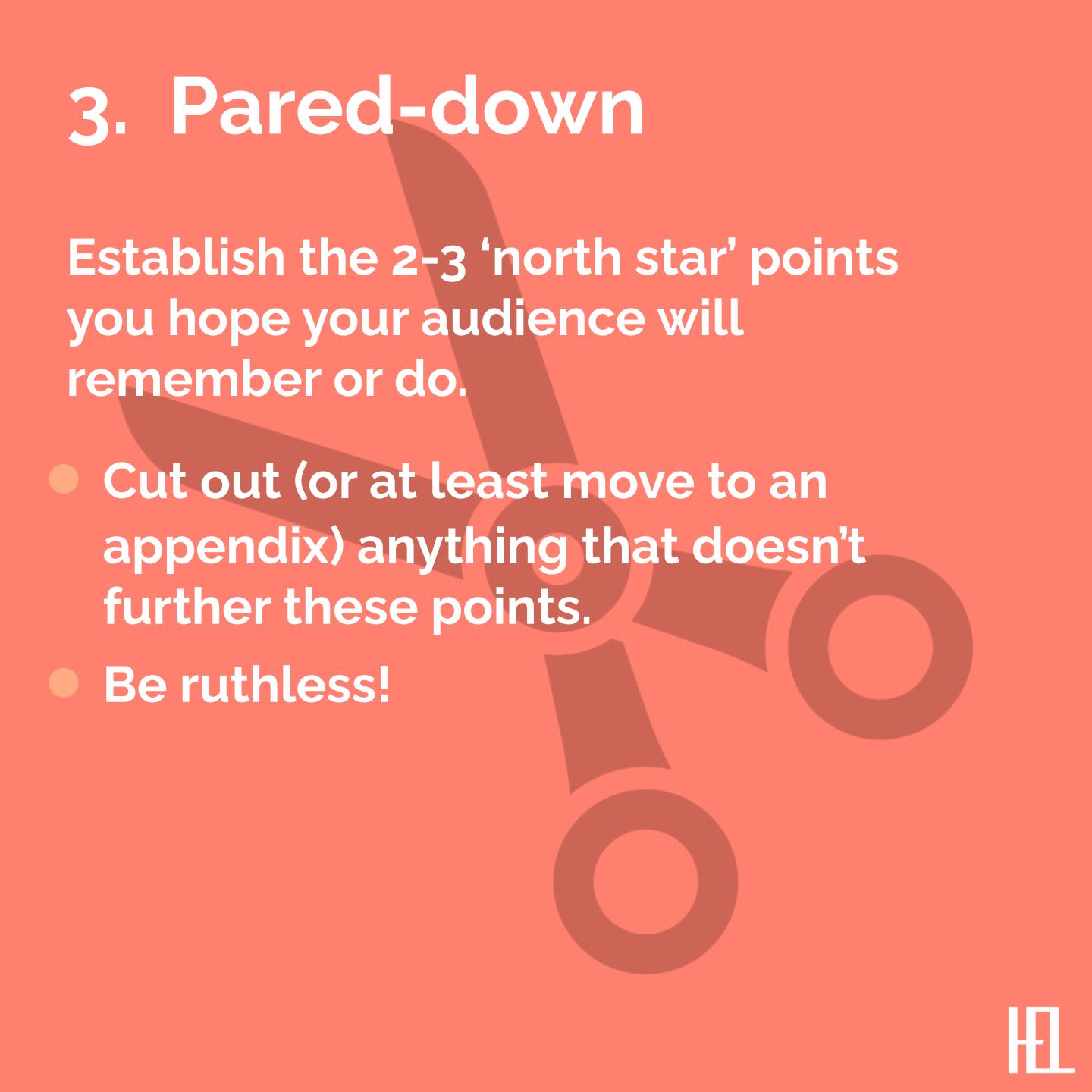
- Identify the 2-3 key things you hope your audience will remember from your presentation and 1 thing you hope they will do afterwards.
- Ruthlessly cut from your outline (since you started on paper, not in slides) to make sure everything supports these points and behaviors.
Build presentations for understanding and impact.

4. PERSUASIVE
- Build your credibility. Depending on your audience, this may/not (only) be about your credentials. Consider how else you can show (not just tell) your audience why you are a trusted messenger on this topic, such as showing personal connection and experience.
- Project confidence!
- Demonstrate your competence through attention to detail, including aesthetic ones.
- Use repetition to your advantage (including following Dale Carnegie: tell ‘em what you are going to say, say it, then tell ‘em what you said)
5. PURPOSE-BUILT
- It’s fine to recycle slides—but build any particular presentation for your particular audience and context. Working from a slide template makes this easier.
- Don’t just follow the flow of your research paper. Organize your talk around your key takeaways, rather than paper sections.
- Remake tables and figures especially for slides. Favor figures over tables. If you need people to see a lot of detail, provide a (virtual) handout.

6. PRECISE
- Work to reduce abstraction, including across geographic, social, and other distances using concrete, visual language (Jonah Berger).
- Technical jargon only brings precision for a very narrow audience. At a minimum, define your terms. Even better, make use of the definition language and leave out the jargon-y term all together (Ann Searight Christiano).

7. PRETTY
- Font size at least 24pt!
- Make use of blank / negative space!
- Use images—but only to enhance, not that detract or confuse.
8. PRACTICED
- Availability bias–Attention is scarce: people will particularly remember your ending, so make sure you have time for it and stick the landing.
- Build trustworthiness and value through polish.

Good preparation and luck for your next presentation!
 Heather E. Lanthorn